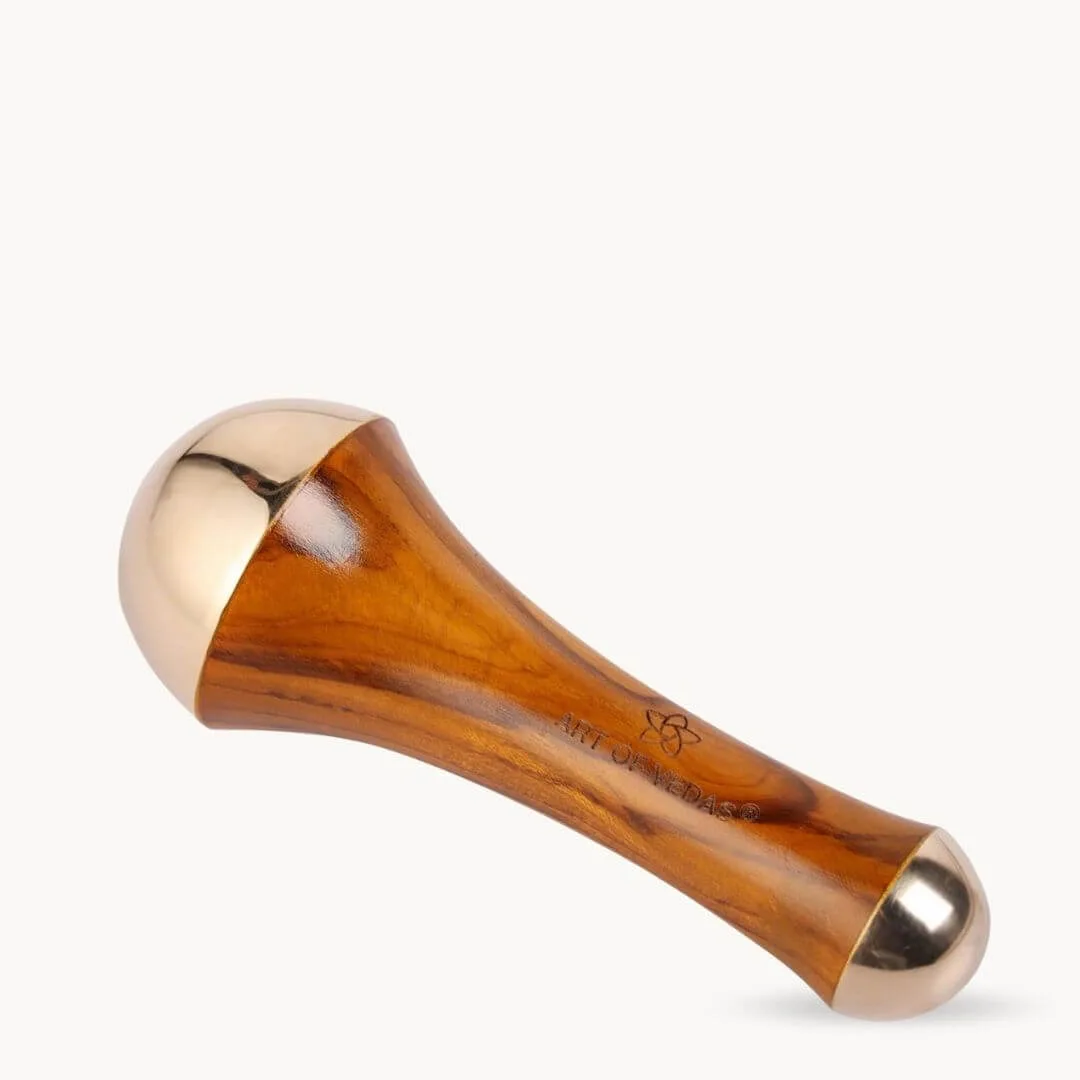
Le bâton Kansa est un outil de bronze très doux qui devient, pour la plupart des personnes, un moment paisible de la routine quotidienne. Il reste que la question des effets indésirables du bâton Kansa mérite d’être posée avant de commencer: savoir ce qui est normal, ce qui relève du simple aspect, et à quel moment il convient de laisser l’outil de côté une journée. Ce guide sans détour réunit les quelques observations cutanées à garder en mémoire pour que votre bâton Kansa demeure un plaisir d’usage.
Ce que révèle la trace grise
Le premier effet remarqué est une légère marque grise ou argentée sur la peau à l’issue de la séance. Rien d’anormal là-dedans. Le Kansa est un bronze, alliage de cuivre et d’étain, et la rencontre du métal avec les huiles naturelles de la peau laisse parfois une trace superficielle. Elle est purement esthétique et disparaît d’un coup de linge ou lors du nettoyage suivant. Certaines personnes y voient même le signe que le rituel a accompli son lent travail. Pour l’éviter avant une sortie, il suffit de pratiquer le massage le soir et de laisser la trace se dissiper pendant la nuit.
Pression et rythme du geste
La plupart des petits désagréments liés aux outils du visage tiennent à une pression excessive ou à un manque d’huile. Le bronze doit glisser, jamais accrocher. Déposez toujours d’abord un voile d’huile de visage afin que le dôme se déplace sans résistance, et gardez la main légère: c’est au poids de l’outil de travailler, non à la main. Les passages lents sont plus agréables et plus respectueux de la peau que les gestes rapides et appuyés. Si la peau devient chaude, tendue ou sensible en cours de séance, allégez aussitôt.
Les moments où il convient de s’abstenir
Certaines circonstances invitent raisonnablement à laisser le bâton au repos et à se contenter des doigts, voire de rien du tout.
- Peau lésée, éraflée ou fraîchement exfoliée: attendez qu’elle se soit apaisée.
- Zone sensible ou réactive un jour donné: laissez-la de côté.
- Juste après une exposition solaire marquée: laissez d’abord la peau se rafraîchir et récupérer.
- Doute sur la réaction de la peau: un passage bref et léger sur la mâchoire avant le reste du visage.
- Usage externe exclusivement, à distance des yeux et de toute muqueuse.
Selon la nature de la peau
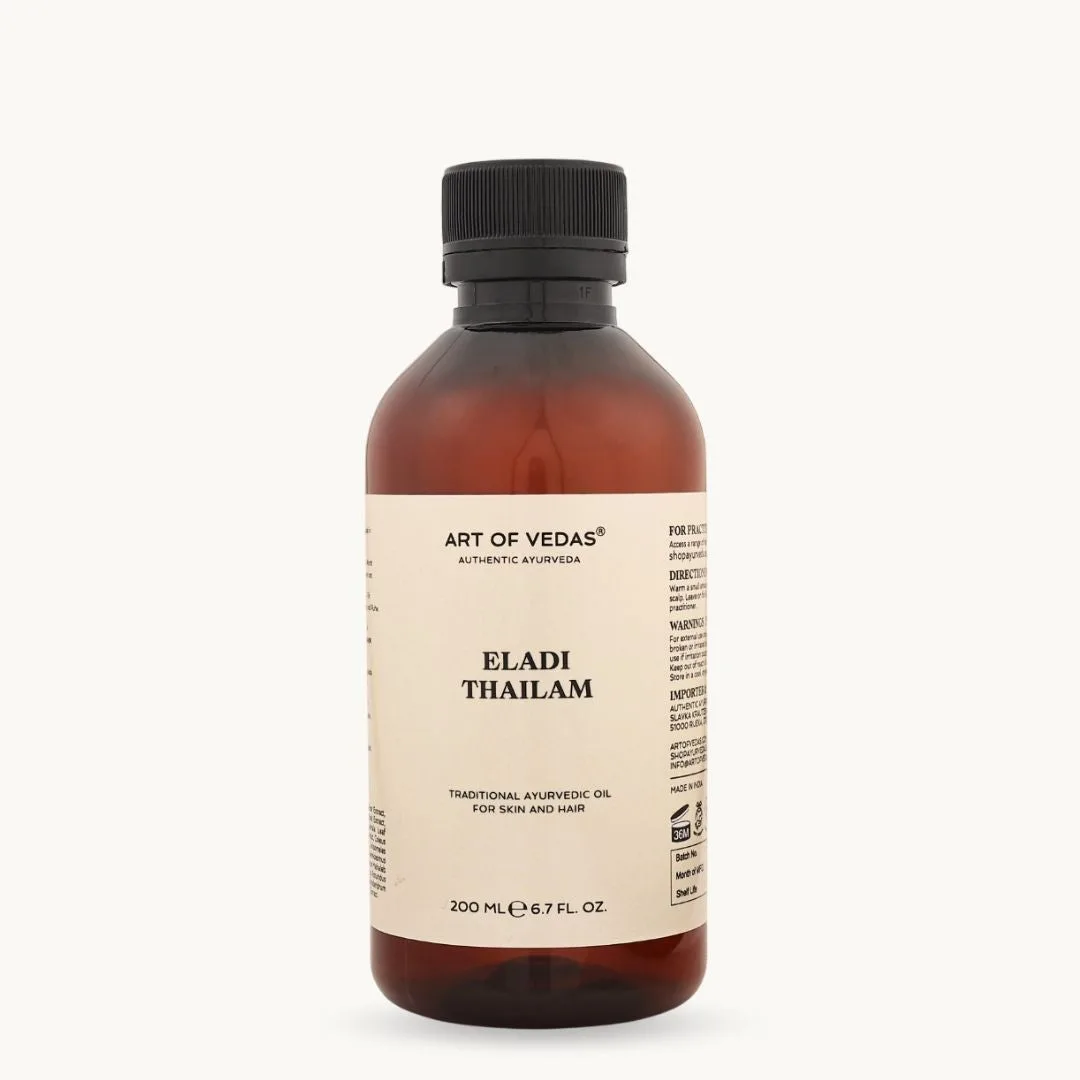
Le bâton convient à la plupart des peaux dès lors que l’huile est bien choisie. Les peaux plutôt sèches accueillent volontiers une huile de visage plus riche, tel l’Eladi Thailam, qui maintient le glissement du dôme sur un massage prolongé. Les peaux facilement réactives demandent le toucher le plus léger et une huile simple et bien tolérée, introduite progressivement au fil de quelques séances courtes. Si votre peau tend à la sensibilité, notre guide sur le soin des peaux sensibles et le test de tolérance constitue un compagnon utile avant d’installer une routine plus longue.
Du côté de l’outil lui-même, un minimum de soin dissipe l’essentiel des inquiétudes. Le bronze est une surface vivante, susceptible de foncer ou de se patiner avec le temps, ce qui est normal et ne change rien à son toucher sur la peau. Essuyez le dôme après chaque usage, séchez-le entièrement et rangez-le à l’abri des rayures. Notre note sur l’entretien des outils en Kansa et en cuivre détaille le nettoyage, et le guide des bienfaits du bâton Kansa replace ces considérations dans l’ensemble de ce que le rituel offre traditionnellement.
Questions fréquentes
Le bâton Kansa présente-t-il de véritables effets indésirables?
Pour la plupart des personnes, l’outil est doux. Ce qu’il faut attendre, essentiellement, c’est une trace grise inoffensive laissée par le bronze, d’ordre esthétique et qui s’efface. Une sensibilité éventuelle signale d’ordinaire une pression excessive ou un manque d’huile.
La trace grise est-elle sans danger?
Oui. Il s’agit d’une interaction de surface entre le bronze et les huiles présentes sur la peau, non d’une absorption de métal. Elle se nettoie sans difficulté.
Le bâton Kansa convient-il à tout le monde?
À la plupart des personnes, oui, avec un toucher léger et une huile adaptée. Évitez les peaux lésées ou fraîchement exfoliées, et gardez des séances brèves si votre peau est réactive.
Que faire si la peau reste sensible après la séance?
Faites une pause d’un jour ou deux, réduisez la pression et augmentez l’huile la fois suivante, et gardez chaque séance lente et courte.
Un test de tolérance est-il nécessaire?
Un passage bref et léger sur la mâchoire avant une séance complète est un moyen raisonnable de voir comment la peau réagit, en particulier si elle tend à la sensibilité.
Usage externe exclusivement. Ne se substitue pas à un avis médical professionnel.