Le Punarnava porte l’un des noms les plus évocateurs de l’herbier ayurvédique. Punar signifie de nouveau et nava signifie neuf, si bien que le nom se lit comme celui qui se renouvelle, allusion à la façon dont cette plante rampante reprend vie au retour des pluies après la saison sèche. La présente monographie expose son identité botanique, son caractère classique, les formes sous lesquelles elle se prépare et le contexte respectueux dans lequel l’Ayurveda la tient depuis longtemps.
Identité botanique
Le Punarnava est la plante Boerhavia diffusa, herbacée basse et étalée à petites fleurs roses, commune dans les régions chaudes du sous-continent indien. La racine est la partie la plus prisée en préparation classique, même si la plante entière s’emploie également. Son habitude de dépérir pendant les mois secs pour revenir avec vigueur à l’arrivée de la mousson est l’image vivante qui sous-tend son nom, et elle a façonné le regard que la tradition porte sur elle.
Le rôle dans l’Ayurveda classique
Les descriptions classiques attribuent au Punarnava un Rasa Madhura, Tikta et Kashaya, soit une saveur douce, amère et astringente, avec un Virya Ushna, c’est-à-dire chauffant. Dans le cadre ayurvédique, il est traditionnellement associé au maintien d’un équilibre hydrique harmonieux et d’une mobilité aisée et sans entrave, et il figure parmi les plantes réputées garder les canaux dégagés. La tradition le rattache classiquement au thème du renouveau qu’exprime son nom. Il s’agit là d’énoncés traditionnels sur le caractère et le rôle de la plante, offerts à titre de contexte et non comme allégation d’effet clinique.
Les formes traditionnelles de préparation
- En Churnam, la racine séchée finement pulvérisée et prise avec un Anupana approprié, l’eau tiède par exemple.
- En Kashayam, décocté de racine préparé et réduit selon la méthode classique.
- Au sein de formules composées classiques qui l’associent à d’autres plantes dégageant les canaux.
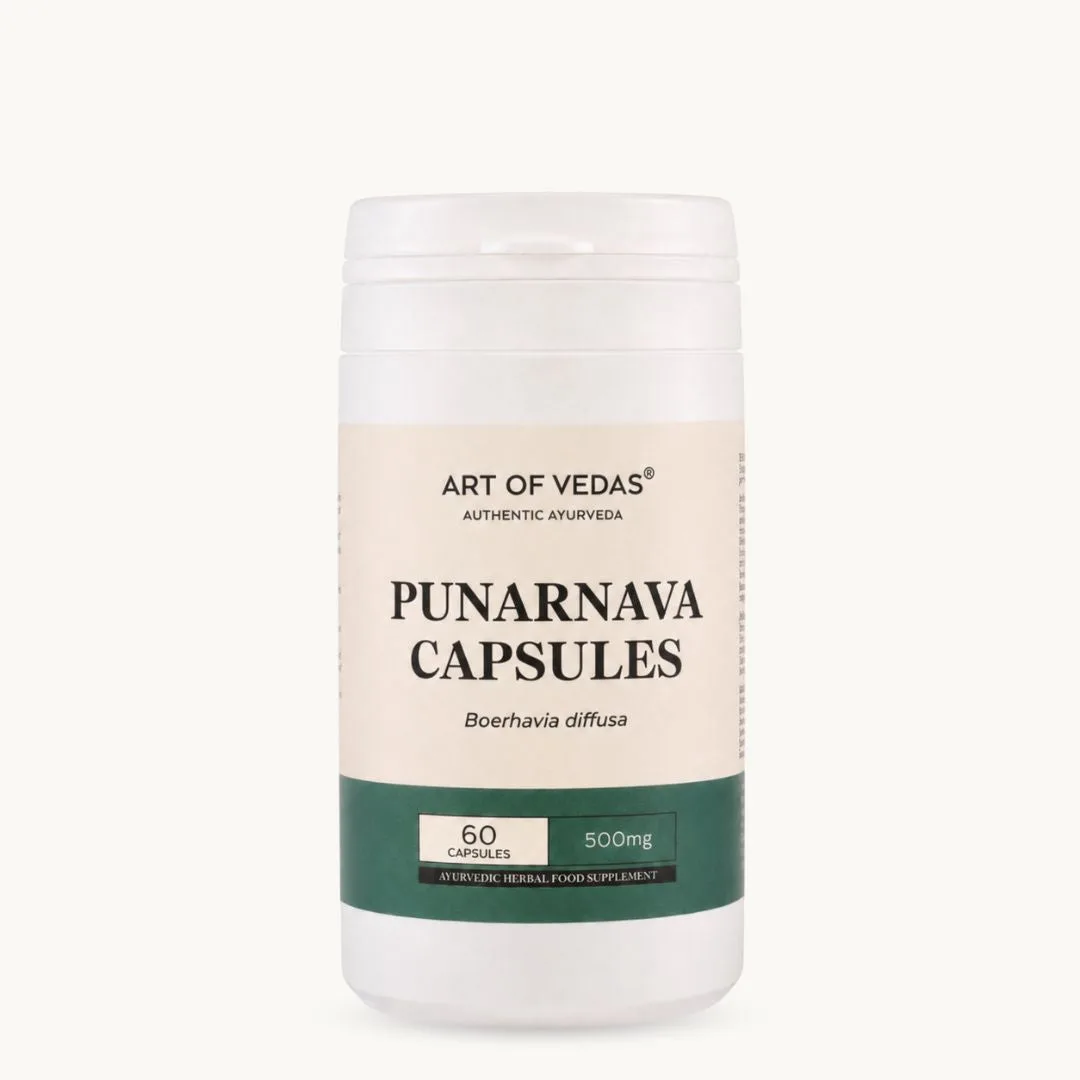
- En capsule moderne, qui porte la plante pulvérisée sous une forme quotidienne commode.
Le Punarnava dans les formulations Art of Vedas
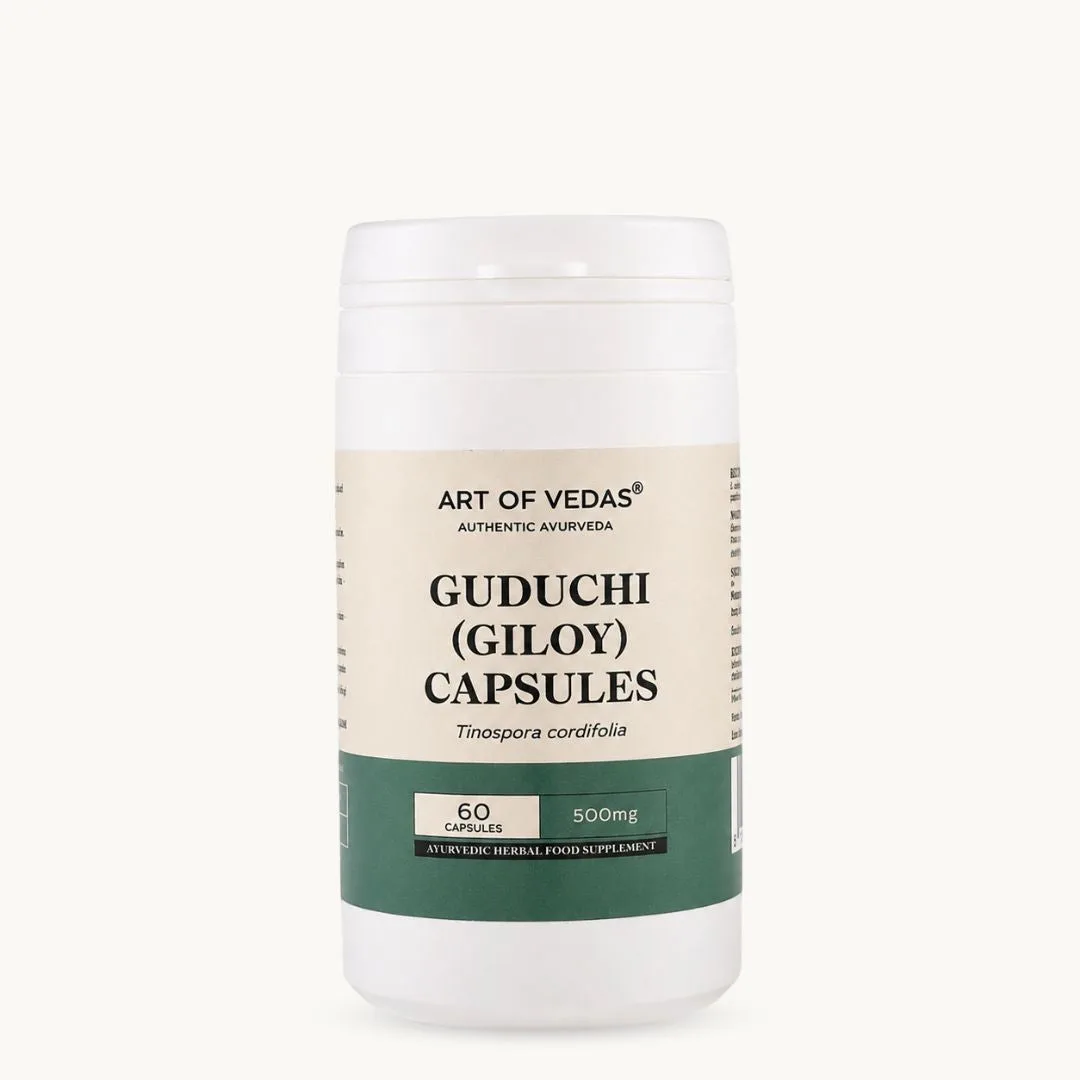
Le Punarnava rejoint la gamme Art of Vedas sous forme de capsules, qui offrent la plante pulvérisée dans un format quotidien simple et gardent ce botanique classique à portée de main. Il appartient au groupe de plantes que la tradition associe aux canaux dégagés et à un équilibre hydrique harmonieux, et il voisine sans peine avec d’autres capsules classiques de plante unique, tel le Guduchi. Vous pouvez consulter les capsules de Punarnava et les capsules de Guduchi qui les accompagnent. Pour un contexte plus large, voyez le guide du Guduchi en Ayurveda, le guide de la formulation en poudre Churnam et la monographie du Gokshura.
Un contexte culturel respectueux
Peu de plantes portent leur sens aussi ouvertement que le Punarnava, dont le nom même parle de renouveau et de retour. Art of Vedas la présente dans cet esprit, comme une plante ayurvédique classique à la longue histoire documentée, à employer avec discernement et, lorsqu’un usage personnel est envisagé, sous la conduite d’un praticien qualifié.
Questions fréquentes
Quel est le nom botanique du Punarnava?
Le Punarnava est Boerhavia diffusa, herbacée basse et étalée à petites fleurs roses, présente dans les régions chaudes de l’Inde. La racine est la partie la plus prisée de l’Ayurveda classique.
Que signifie le nom Punarnava?
Punar signifie de nouveau et nava signifie neuf: le nom se lit donc comme celui qui se renouvelle. Il renvoie à la plante qui reprend vie au retour de la mousson après la saison sèche.
Quelles sont les qualités classiques du Punarnava?
Les descriptions classiques lui donnent un Rasa Madhura, Tikta et Kashaya, doux, amer et astringent, avec un Virya Ushna chauffant. La tradition l’associe à un équilibre hydrique harmonieux et à des canaux dégagés.
Sous quelles formes le Punarnava est-il traditionnellement employé?
Il se présente en poudre Churnam, en décocté Kashayam de racine, au sein de formules composées classiques et dans la capsule moderne qui porte la plante pulvérisée sous une forme quotidienne commode.
Quel produit Art of Vedas contient du Punarnava?
Art of Vedas propose le Punarnava en capsules, présentant la plante traditionnelle pulvérisée dans un format quotidien simple, aux côtés d’autres préparations classiques de plante unique.
Ce produit est un complément alimentaire et n’est pas destiné à diagnostiquer, traiter, guérir ni prévenir une quelconque maladie.