Le Triphaladi Kera Thailam est la version à la coco de l'huile classique au Triphala, et ses usages découlent tout entiers de ce choix de base. Kera veut dire coco: là où l'huile standard se prépare dans le sésame, le Kera Thailam porte les trois mêmes fruits du Triphala dans une huile plus légère et plus fraîche. Voici à quoi il sert, comment se répartissent les emplois capillaires et cutanés, et ce qui le distingue de la version au sésame.
Kera, c'est la noix de coco
En malayalam, kera désigne la noix de coco; Kera Thailam ne signifie donc rien de plus qu'une huile préparée sur base de coco. Fraîche et légère par nature, la coco confère au Triphaladi Kera Thailam un toucher plus vif et une absorption plus rapide qu'une huile de sésame. La logique de dénomination est celle de toutes les huiles kéralaises, et elle explique qu'une variante à la coco accompagne si souvent la préparation classique au sésame. Les plantes ne bougent pas; seul le support change.
Cheveux, cuir chevelu, peau: la répartition des usages
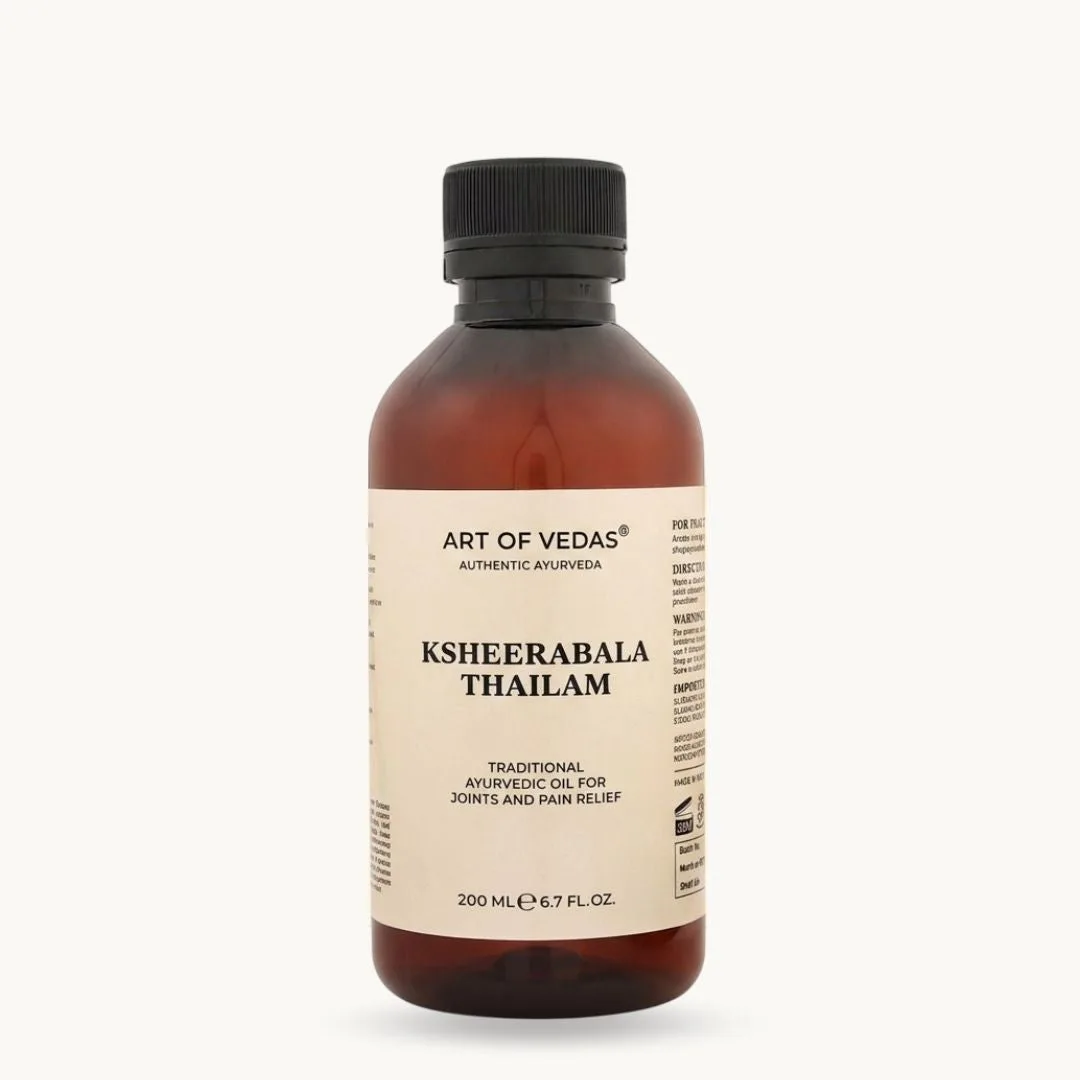
Fraîche et légère, la base de coco vaut au Triphaladi Kera Thailam une faveur particulière pour le cuir chevelu et les cheveux, et par temps chaud. On le tiédit légèrement, on le masse dans le cuir chevelu, on le rince, à la manière des autres huiles pour la tête. Sa légèreté le rend également confortable sur la peau lorsque les huiles de sésame paraissent trop riches. Pour une tradition d'huile capillaire rafraîchissante voisine, voyez notre guide du Ksheerabala Thailam pour les cheveux; la version au sésame est traitée dans notre guide du Triphaladi Thailam.
Ce qui le distingue du Triphaladi au sésame
Même cœur Triphala, base différente, et donc toucher et saison différents. La version au sésame réchauffe, pèse un peu plus, et convient aux mois frais comme aux peaux plus sèches. La version Kera à la coco rafraîchit, allège, et convient aux temps chauds comme au cuir chevelu. On retrouve là le partage bien connu entre sésame et coco dans les huiles ayurvédiques, exposé dans notre comparaison entre Eladi Thailam et Eladi Kera Thailam. Trancher revient à considérer la saison, l'état de la peau et la zone d'application.
Les usages du Triphaladi Kera Thailam en un coup d'œil
- Une huile rafraîchissante pour le cuir chevelu et les cheveux, tout particulièrement par temps chaud
- Une option plus légère lorsque les huiles de sésame paraissent trop riches
- Une huile de massage légère et fraîche, confortable sur la peau
- Une huile du soir pour le massage de la tête, propice au retour au calme
- Le pendant à la coco du Triphaladi Thailam classique au sésame
Les ingrédients
Comme la version au sésame, le Triphaladi Kera Thailam repose sur les trois fruits du Triphala: Haritaki (Terminalia chebula), Bibhitaki (Terminalia bellirica) et Amalaki (Emblica officinalis), conduits par une décoction végétale, ici dans une base d'huile de coco. La recette classique admet en outre des plantes d'appui. L'huile achevée s'emploie exactement comme son homologue au sésame, que l'on trouve sous le nom de Triphaladi Thailam. Notre gamme compte une autre huile kéralaise pour la peau sur base de coco, le Nalpamaradi Kera Thailam.
Questions fréquentes
À quoi sert le Triphaladi Kera Thailam?
C'est une huile au Triphala sur base de coco, employée surtout pour le cuir chevelu et les cheveux, et comme huile légère et fraîche sur la peau. Tiédie, massée dans le cuir chevelu puis rincée, elle soutient traditionnellement, selon l'Ayurveda, une tête au frais et apaisée ainsi que des cheveux bien nourris. Sa base légère en fait un choix confortable par temps chaud et pour qui préfère un fini plus frais.
Que signifie kera dans Triphaladi Kera Thailam?
Kera est le mot malayalam pour la noix de coco. Triphaladi Kera Thailam désigne donc l'huile au Triphala préparée sur base de coco, par opposition à la version classique au sésame. La partie végétale reste inchangée; seule varie l'huile porteuse, et c'est elle qui vaut à la version Kera son caractère plus léger et plus frais que l'huile de sésame.
La version Kera convient-elle mieux aux cheveux?
Beaucoup la préfèrent pour le cuir chevelu et les cheveux, la coco étant fraîche et légère, donc bien accordée aux huiles pour la tête comme aux temps chauds. La version au sésame demeure toutefois une excellente huile capillaire, surtout durant les mois frais. Aucune ne l'emporte: la saison, l'état du cuir chevelu et le fini recherché décident.
Peut-on l'employer sur le visage et le corps?
Sa base de coco, légère et fraîche, la rend confortable sur la peau, et beaucoup l'emploient bien au-delà du cuir chevelu. Une petite quantité, tiédie entre les paumes, suffit, avec un massage léger. Un essai préalable à la face interne de l'avant-bras s'impose, et le contour des yeux est à éviter. Par forte chaleur, la coco se révèle plus agréable qu'un sésame plus riche.
Comment se situe-t-elle face au Triphaladi Thailam au sésame?
Même cœur Triphala, base différente. Le sésame réchauffe et nourrit davantage, ce qui convient aux mois frais et aux peaux plus sèches; la coco rafraîchit et allège, ce qui convient aux temps chauds et au cuir chevelu. Notre guide du Triphaladi Thailam présente la version au sésame en détail et permet de comparer les deux, puis de choisir selon la saison et l'usage.
Usage externe uniquement. Ne se substitue pas à un avis médical professionnel.