Ayurveda has always followed the turning of the year. Its guidance for living in tune with the seasons, known as Ritucharya, adjusts diet, routine and self-care as the weather changes. In the cold months, when the air turns dry and sharp, the tradition leans towards warmth, richness and grounding. This is the season in which a Kuzhambu, the dense semi-solid preparation of classical, comes into its own. Its warming character and slow absorption make it a natural companion for the European winter.
Ritucharya: Ayurveda's Seasonal Rhythm
Ritucharya is the practice of shaping daily habits around the season. Where the warm months call for lighter, cooling care, the cold months ask for the opposite. Richer preparations, warmer foods and unhurried evening routines all belong to this time of year. Choosing a preparation by season sits alongside choosing by constitution, a subject covered in our guide to choosing a Kuzhambu by Dosha. The two work together, since a warming formula that suits Vata also suits the cold season, when Vata naturally rises.
Why the Cold Season Raises Vata
Vata carries the qualities of cold, dryness, lightness and movement, and the winter air amplifies each of them. As the season turns, many people notice these same qualities in themselves: a wish for warmth, drier skin, restlessness in the evening. Ayurveda answers like with opposite, meeting cold and dryness with warmth and unctuousness. A dense, oily, warming preparation is exactly the counterbalance the tradition recommends for this time of year.
Why a Kuzhambu Suits the Cold
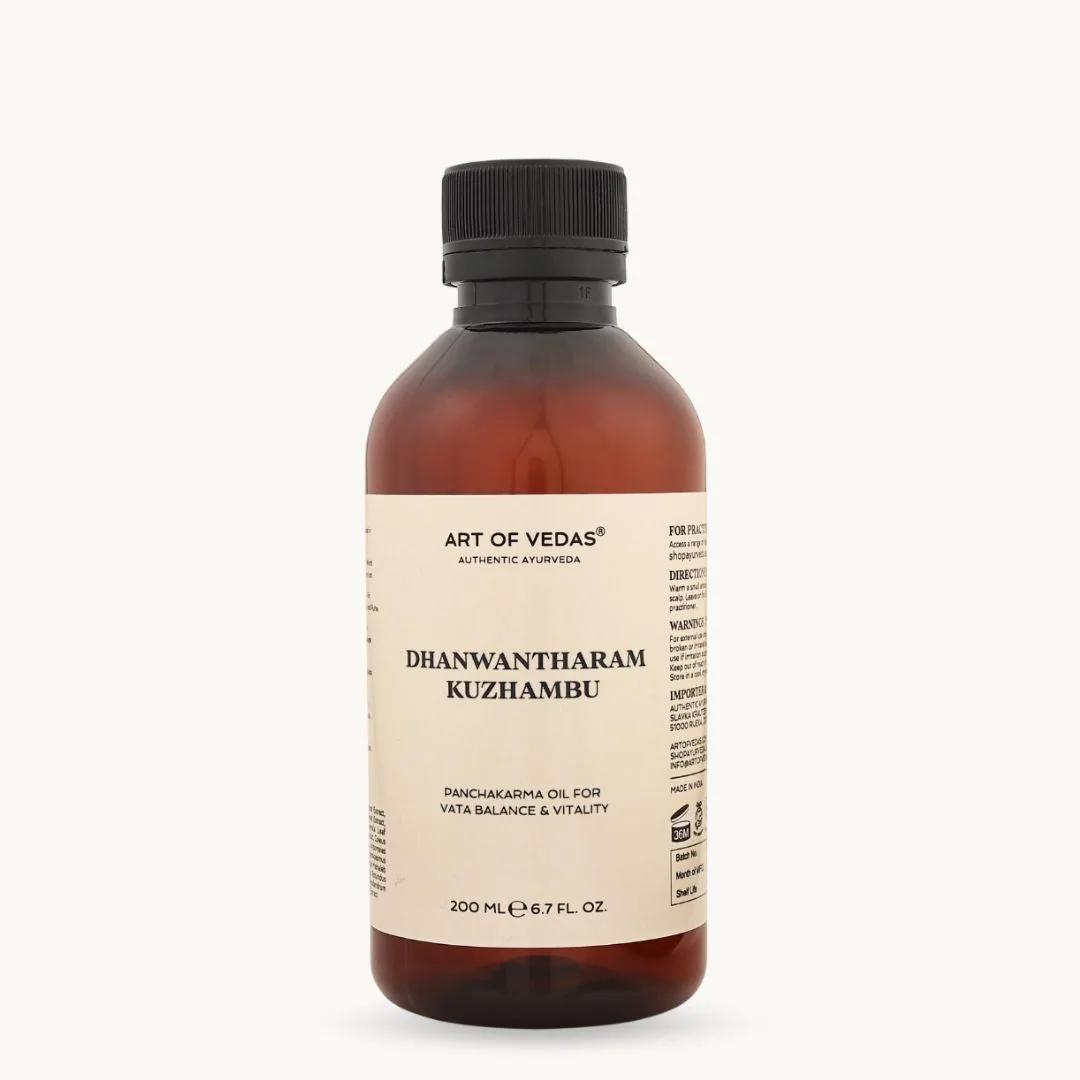
A Kuzhambu is built for warmth. Its three-fat base of sesame, coconut and castor is reduced to a semi-solid that clings to the skin and absorbs slowly, giving a longer, more grounding contact than a thin oil. A warming formula such as Dhanwantharam Kuzhambu is a traditional cold-season choice, worked into the lower back, hips and knees, the regions that most welcome warmth as the temperature drops. Because a Kuzhambu stays where it is placed, it is well suited to focused evening care rather than a quick morning application.
An Evening Warmth Ritual
The cold season invites a slower close to the day. A simple evening ritual begins by warming a small amount of Kuzhambu until it softens, then working it into the areas that feel cool or stiff with steady, unhurried strokes. A short rest allows the preparation to settle, after which a warm bath completes the routine and helps the body hold its warmth into the night. Kept to a regular rhythm through the darker months, this ritual becomes a grounding point in the day and a gentle way to honour the season.
Pairing with a Warming Thailam
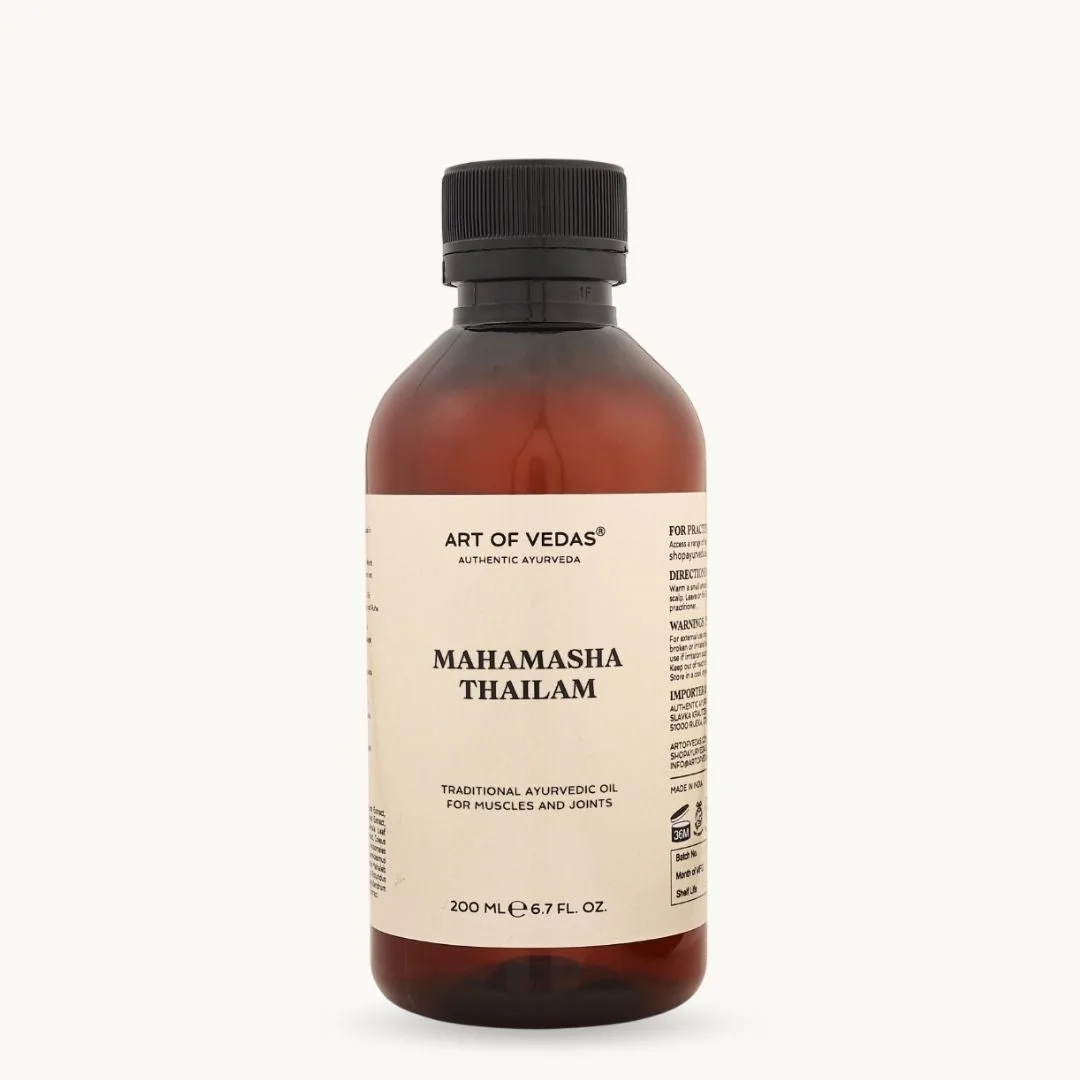
Some evenings call for a liquid oil as well. A warming Thailam such as Mahamasha Thailam can be used for a flowing full-body Abhyanga on days when time allows, with a Kuzhambu reserved for focused attention on particular regions. The Mahamasha Thailam complete guide describes that warming oil in detail, and our selection guide for Vata oils sets out the wider choice of cold-season Thailams.
A cold-season Kuzhambu routine offers:
- Warming, grounding care that meets the cold and dryness of winter.
- Slow absorption and long contact, well suited to focused evening application.
- A regular rhythm that anchors the day through the darker months.
- A natural pairing with a warming Thailam for fuller Abhyanga when time allows.
- A seasonal counterbalance in keeping with the principles of Ritucharya.
In terms of ingredients, a cold-season Kuzhambu relies on its warming herbs and its rich fat base. Dhanwantharam Kuzhambu draws on the Dashamula and related Vata-settling herbs cooked into sesame, coconut and castor and reduced to a semi-solid. Mahamasha Thailam, by contrast, is a liquid oil carrying Masha and a broad group of warming herbs, offered here as the flowing companion to the denser Kuzhambu. Both share the warming intention that defines cold-season care.
Frequently Asked Questions
What is Ritucharya?
Ritucharya is the Ayurvedic practice of adjusting routine, diet and self-care to the season. In the cold months it favours warmth, richness and grounding, which is why denser preparations suit this time of year.
Why is a Kuzhambu better suited to winter than summer?
A Kuzhambu is warming and rich. These qualities counterbalance the cold and dryness of winter, whereas warmer months usually call for lighter, cooler care.
When in the day should I use a cold-season Kuzhambu?
The evening suits it well. Warming a Kuzhambu and working it into cool or stiff regions before a warm bath makes a grounding close to the day.
Can I use a Kuzhambu and a Thailam in the same routine?
Yes. A warming Thailam suits a flowing full-body Abhyanga, while a Kuzhambu is reserved for focused attention on particular regions. Many people use both through the cold season.
Do I still need to warm the preparation in a heated home?
Warming a Kuzhambu softens its semi-solid texture so it spreads comfortably, regardless of room temperature. A gentle warmth is part of the ritual as much as a practical step.
For external use only. Not a substitute for professional medical advice.