Qui découvre l’Ayurveda rencontre vite trois mots pour des préparations d’apparence voisine: Thailam, Kuzhambu et Mezhukupakam. Ils ne sont pas interchangeables. Chacun occupe un point différent sur un spectre de consistance, de l’huile la plus fluide à la préparation semi-solide la plus ferme, et chacun s’applique à sa manière. Savoir où se situe une préparation sur ce spectre en dit long sur la sensation qu’elle laisse sur la peau et sur l’usage auquel elle est destinée.
Le spectre des consistances
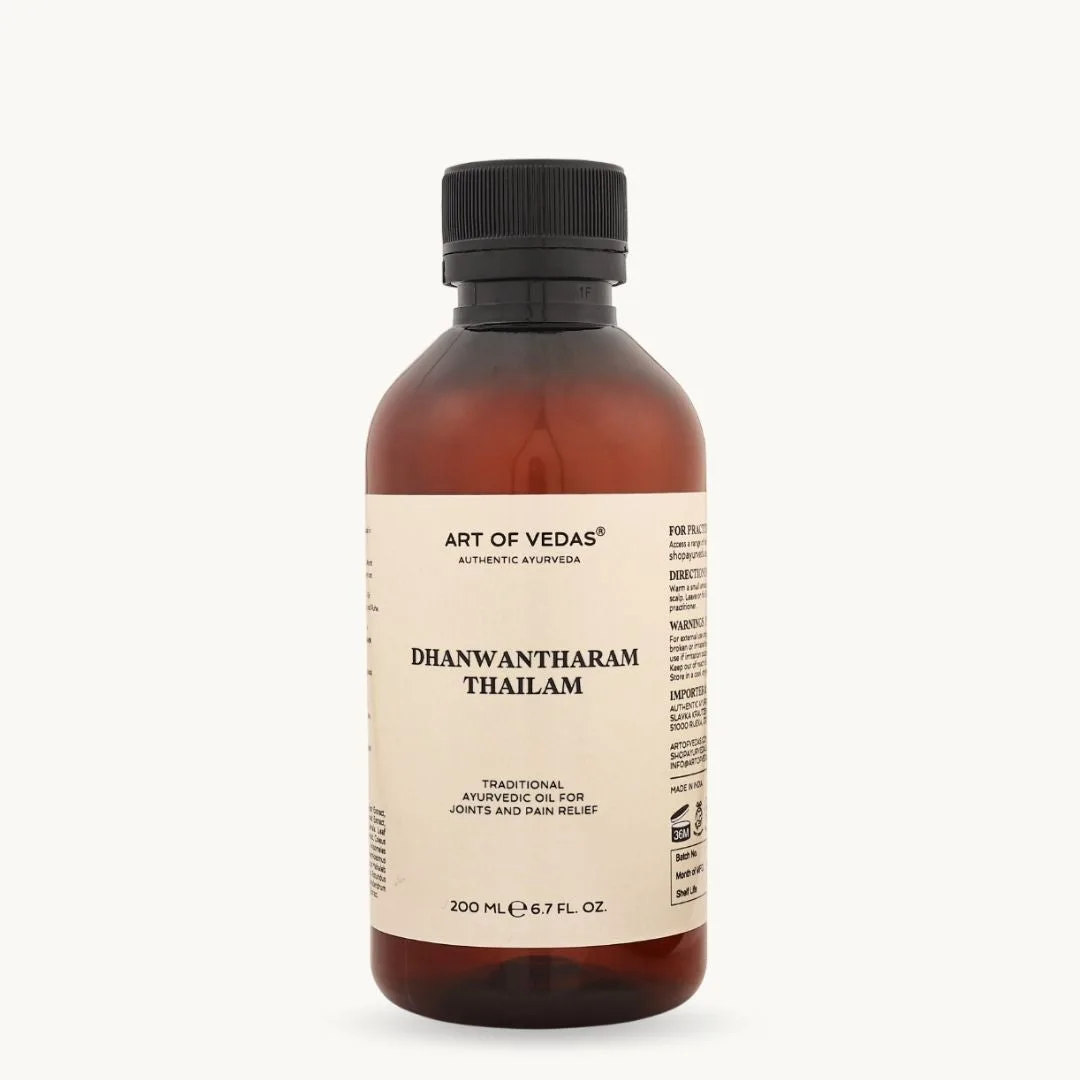
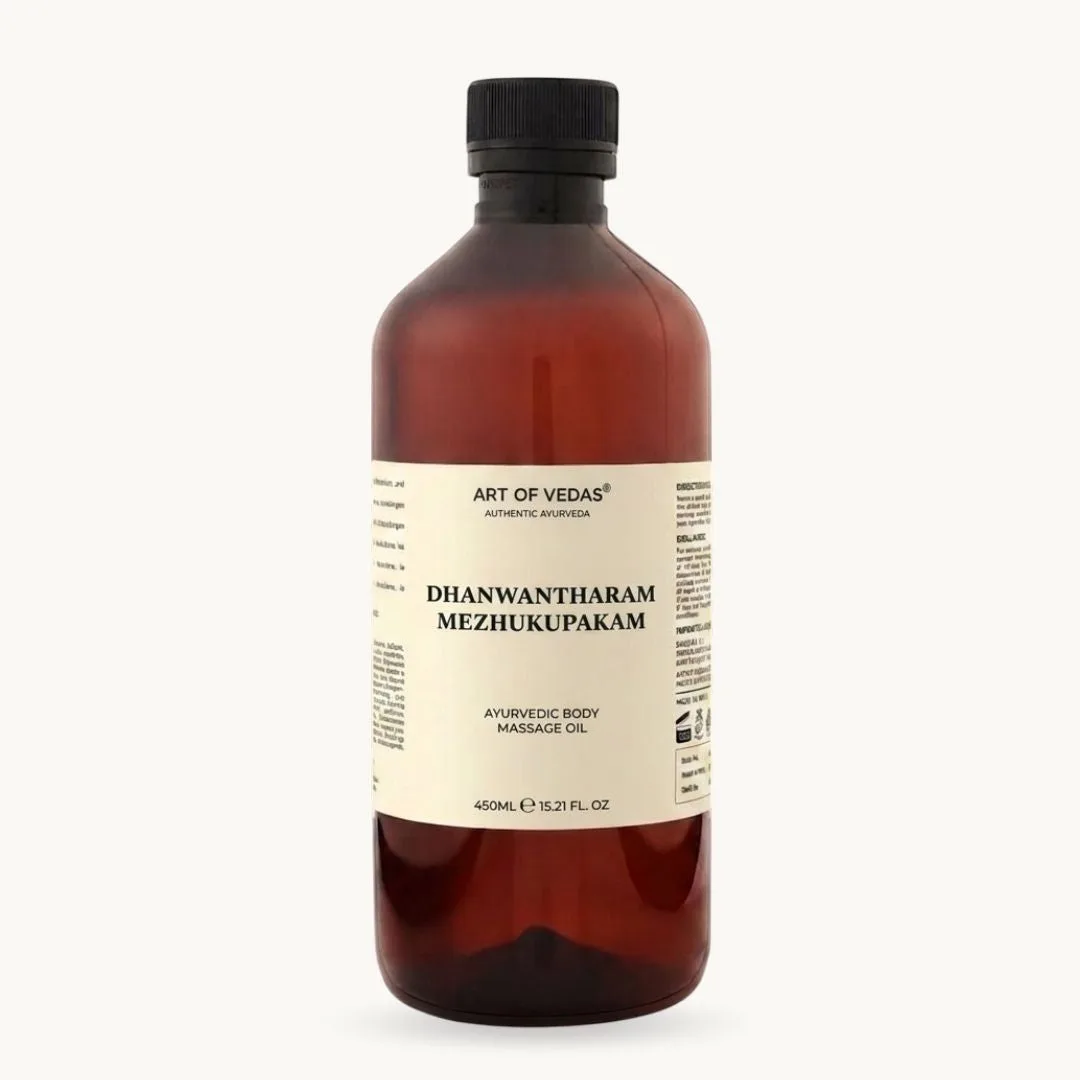
La façon la plus simple de comprendre ces trois formes consiste à imaginer une seule formule végétale préparée à trois épaisseurs différentes. Cuire les mêmes plantes dans un corps gras et arrêter la réduction à des stades distincts donne des résultats de plus en plus fermes. Le Thailam est le plus léger, le Kuzhambu occupe le milieu semi-solide, et le Mezhukupakam est le plus ferme des trois. La famille Dhanwantharam en offre l’illustration la plus nette, puisqu’elle se décline en Dhanwantharam Thailam, en Dhanwantharam Kuzhambu et en Dhanwantharam Mezhukupakam. L’ensemble de la gamme est cartographié dans notre guide des formats Dhanwantharam.
Le Thailam, huile fluide
Un Thailam est une huile qui demeure liquide à température ambiante. Elle se verse aisément, s’étale sur de grandes surfaces et constitue le support classique de l’Abhyanga du corps entier, cet auto-massage fluide qui donne son nom à une si grande part du soin du corps ayurvédique. Sa fluidité lui vaut une pénétration relativement rapide et la rend particulièrement adaptée à la couverture du corps entier par de longs gestes réguliers. La distinction entre une huile et une préparation semi-solide est approfondie dans notre comparaison Thailam et Kuzhambu.
Le Kuzhambu, le milieu semi-solide
Un Kuzhambu occupe le milieu du spectre. Semi-solide, plus épais et plus dense qu’un Thailam, il conserve sa forme à température ambiante. Plutôt que de s’étaler en couche mince, il demeure sur la zone où il est déposé et pénètre lentement, ce qui en fait le choix naturel du travail ciblé sur une région précise, le bas du dos, les genoux ou les épaules. On le tiédit habituellement avant l’usage pour qu’il ramollisse assez et se laisse travailler dans la peau. C’est une préparation ciblée et non un support pour couvrir rapidement le corps entier.
Le Mezhukupakam, la forme la plus ferme
Un Mezhukupakam est le plus ferme des trois. Obtenu par la réduction la plus longue et la plus patiente, il est solide à température ambiante et fond au contact de la chaleur de la peau. Son caractère concentré fait qu’une très petite quantité suffit, et il se réserve à l’application la plus ciblée de toutes. Là où un Thailam s’écoule et où un Kuzhambu demeure, un Mezhukupakam doit d’abord s’assouplir contre le corps avant de pouvoir être étalé. Voilà qui en fait la plus transportable et la plus économe des trois formes.
Choisir selon la texture et la routine
La forme juste dépend moins des plantes, qui peuvent être identiques, que de la manière dont vous comptez appliquer la préparation:
- Un Thailam pour l’Abhyanga du corps entier et pour couvrir de grandes surfaces par gestes fluides.
- Un Kuzhambu pour le travail ciblé sur une seule région, quand la pénétration lente et la tenue importent.
- Un Mezhukupakam quand vous recherchez la forme la plus concentrée et la plus petite quantité.
- Un tiédissement doux du Kuzhambu ou du Mezhukupakam avant l’usage, pour qu’il ramollisse et s’étale.
- Un accord entre la forme et la saison, les préparations plus fermes convenant au temps frais et aux routines du soir.
Du côté des ingrédients, les trois formes partent du même principe: un décocté végétal cuit dans un ou plusieurs corps gras, le plus souvent l’huile de sésame accompagnée de coco et de ricin. La différence tient entièrement au degré de réduction. Un Thailam est arrêté alors qu’il est encore liquide, un Kuzhambu est mené jusqu’au stade semi-solide, et un Mezhukupakam est réduit plus loin que tous. Aucune cire ni aucun agent durcissant n’entre dans l’un ou l’autre, la fermeté étant le fruit du temps et de la chaleur. Voilà pourquoi un même nom de formule peut se présenter sous trois textures, comme pour le Dhanwantharam, et pourquoi le choix entre elles est en réalité un choix d’application. Pour un examen plus approfondi de la forme la plus ferme, voyez notre guide du Mezhukupakam.
Questions fréquentes
Le Thailam, le Kuzhambu et le Mezhukupakam sont-ils faits de plantes différentes?
Pas nécessairement. Une même formule se prépare sous les trois formes. Ce qui change est la consistance, obtenue en réduisant la préparation à des stades différents, non la recette végétale elle-même.
Quelle forme pénètre le plus vite?
Le Thailam, parce qu’il est le plus fluide et le plus liquide. Un Kuzhambu pénètre plus lentement, et un Mezhukupakam doit d’abord fondre contre la peau avant de pouvoir être travaillé.
Un Kuzhambu n’est-il qu’une huile épaisse?
Non. Un Kuzhambu est une préparation semi-solide. Il conserve sa forme à température ambiante et s’applique sur une zone précise, tandis qu’une huile s’écoule et s’étale sur le corps.
Faut-il tiédir ces préparations?
Un Thailam s’emploie à température ambiante ou légèrement tiédi. Un Kuzhambu et un Mezhukupakam se tiédissent habituellement en douceur pour qu’ils ramollissent assez et s’étalent confortablement.
Par laquelle commencer?
Beaucoup débutent par un Thailam, le plus facile à appliquer sur une grande surface. Un Kuzhambu ou un Mezhukupakam convient à qui souhaite un soin ciblé et concentré sur une région donnée.
Usage externe exclusivement. Ne se substitue pas à un avis médical professionnel.